The combined net worth of the richest activists in the world exceeds $200 billion — a figure large enough to fund the elimination of extreme poverty in multiple countries at once. These are not passive donors writing checks from boardrooms. They build foundations, lobby governments, fund scientific research, and in some cases take to the field personally. For anyone tracking their own personal finance journey or studying how extreme wealth intersects with social responsibility, these six profiles offer a concrete look at what high-stakes activism actually looks like in practice.

The assumption that wealth and activism are incompatible is losing ground. Several of the most financially powerful individuals alive today are also among the most committed advocates for environmental, humanitarian, and social causes. Their resources give their advocacy a reach no grassroots campaign can match alone. That reach comes with real trade-offs — but the scale of documented impact is hard to dismiss.
This guide profiles six of the wealthiest activists globally, examines what drives and limits wealth-based advocacy, explores the tools and organizations they use, and draws out practical lessons for readers at any stage of their own giving journey.
Contents
Wealthy activists operate on a fundamentally different scale than most advocates. The resources available to them create extraordinary opportunities — and legitimate criticisms worth understanding before drawing conclusions about who these people are and what motivates them.
Pro insight: The most credible wealthy activists back existing grassroots organizations rather than building parallel structures that compete for the same attention and donor base.
The table below provides a quick comparison of all six profiles before diving into the details of each individual's approach, cause, and documented impact.
| Name | Estimated Net Worth | Primary Cause | Key Organizational Vehicle |
|---|---|---|---|
| Jeff Bezos | $130 billion+ | Climate change | Bezos Earth Fund |
| Bill Gates | $72.7 billion+ | Global health & poverty | Bill & Melinda Gates Foundation |
| Oprah Winfrey | $2.5 billion | Education & leadership | Oprah Winfrey Foundation |
| Leonardo DiCaprio | $260 million | Environmental conservation | Leonardo DiCaprio Foundation |
| Sean Penn | $150 million | Humanitarian relief | CORE (Community Organized Relief Effort) |
| Cherie Nursalim | $1 billion | Sustainability & development | GITI Group CSR initiatives |
Jeff Bezos built Amazon into the world's dominant e-commerce and cloud computing platform before stepping down as CEO to focus on other pursuits — including large-scale environmental activism. His Bezos Earth Fund committed $10 billion to combat climate change, one of the largest single pledges by a private individual in recorded history.
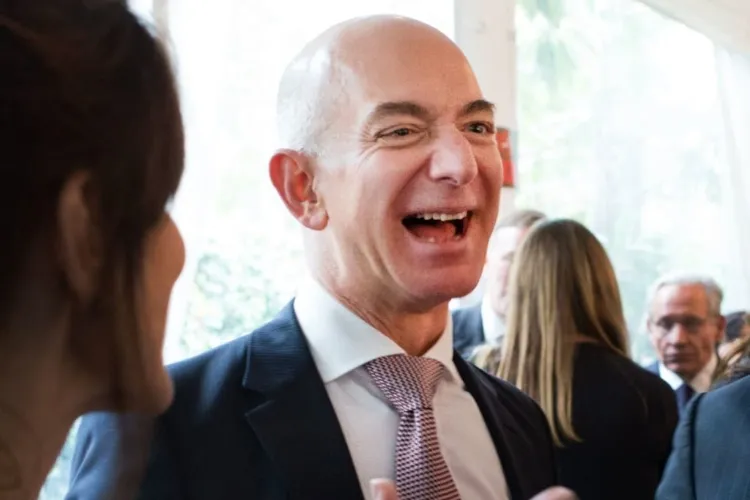
Bill Gates left day-to-day operations at Microsoft to run the Bill & Melinda Gates Foundation full-time — now the largest private charitable foundation in the world. The organization's mandate targets global health emergencies, extreme poverty, and educational access in underserved regions.
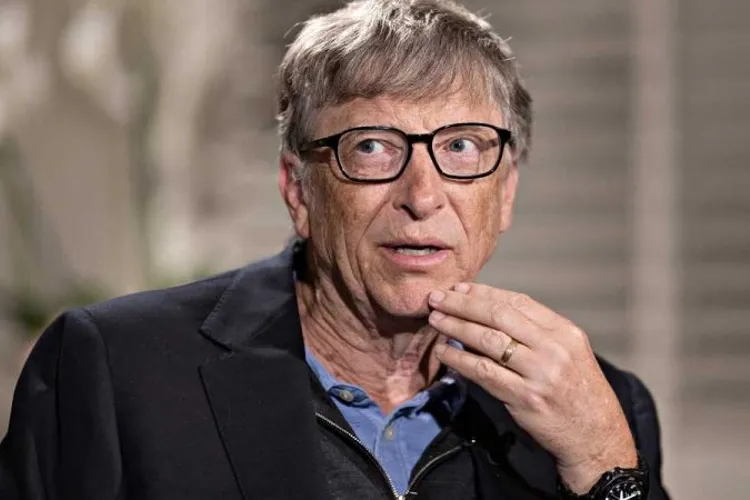
Oprah Winfrey's activism differs from the tech-billionaire model in one key way: it is deeply personal and community-rooted. Her foundation centers on education and leadership development, particularly for underserved youth, with a geographic focus on South Africa and the United States.

Leonardo DiCaprio has leveraged his status as one of the world's most recognized and highest-paid actors to drive environmental activism for over two decades. His foundation has granted more than $100 million to conservation, indigenous rights, and ocean protection projects globally.

Sean Penn turned a celebrated acting career into a launching pad for hands-on humanitarian work. He is best known for founding CORE — Community Organized Relief Effort — which deployed on-the-ground disaster relief in Haiti after the 2010 earthquake and continued operating long after media attention moved on.
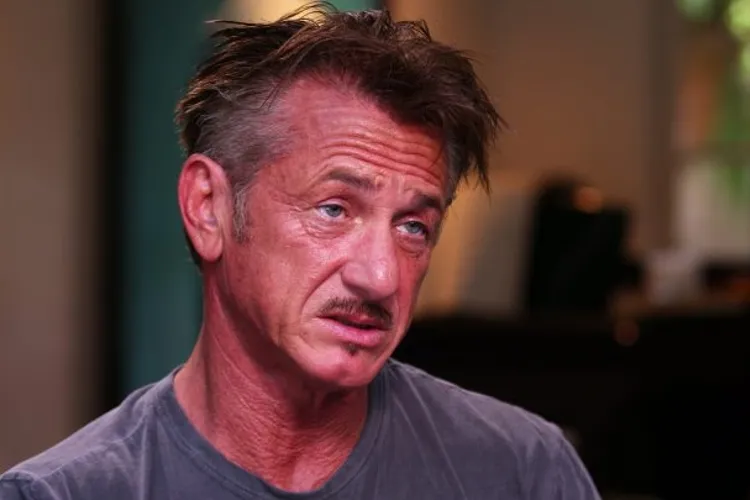
Cherie Nursalim is the Vice Chairman of the GITI Group and one of the most prominent sustainability advocates in Asia-Pacific business circles. Her activism operates primarily through corporate governance channels rather than a standalone charitable foundation — a model increasingly common among non-Western billionaires.

The richest activists do not operate alone. Behind every high-profile commitment is an organizational structure that handles execution, compliance, and measurement. Understanding those structures helps explain how a pledge translates — or fails to translate — into on-the-ground results.
Most of the individuals profiled above work through private foundations. These vehicles offer several structural advantages over direct donations:
Not all activists follow the foundation route. Sean Penn's CORE operates as a 501(c)(3) nonprofit funded by a mix of public donations and government contracts. DiCaprio's foundation partners directly with established conservation organizations rather than building parallel research infrastructure. These structural differences reflect distinct theories of change — some donors want control, others want leverage through existing systems.
Wealthy activists increasingly use public platforms to multiply their giving. Rather than donating privately, they launch matching campaigns that invite broader participation — turning a $10 million pledge into a $50 million public movement. Readers looking to understand the mechanics behind these campaigns will find the guide to top crowdfunding platforms useful for seeing how these tools work at every scale of giving.
Warning: Matching pledge campaigns often have undisclosed caps — donors should read the full terms before assuming every dollar contributed triggers a match.
The strategies used by the richest activists in the world are not exclusive to billionaires. The underlying principles scale to any income level. The key insight is that consistency and focus outperform irregular large gifts every time the data is examined.
Every activist profiled above chose a cause before settling on a vehicle. Bezos chose climate. Gates chose global health. Winfrey chose education. The dollar amount came second. For individual donors, this sequence matters — commitment to a specific cause drives long-term consistency, which produces more measurable impact than scattered giving across multiple issues.
The most efficient activists at any wealth level avoid rebuilding what already exists. DiCaprio funds established conservation organizations with proven distribution networks. Penn deployed through existing disaster-relief infrastructure in Haiti before building CORE. The same logic applies to individual donors.
There is a meaningful difference between giving once and building a sustained giving practice. The richest activists have constructed systems — organizational, financial, and personal — that ensure their commitments survive changes in public attention, market conditions, and personal circumstances. Anyone can apply that same systems-thinking at a smaller scale.
For those just starting, the goal is not to maximize impact immediately. It is to build a habit that compounds over time. Small, consistent actions done for years outperform large sporadic gestures every time.
As financial capacity grows, the giving strategy should evolve to match it. The patterns demonstrated by the world's wealthiest activists offer a useful road map for scaling from individual donor to meaningful philanthropist.
Readers interested in how technology-driven wealth compares to traditional philanthropy may find the profiles of the richest people in cryptocurrency informative — several crypto billionaires have begun scaling charitable commitments significantly as their assets matured. Similarly, the richest real estate investors represent another category of high-net-worth individuals increasingly active in structured giving programs.
Jeff Bezos ranks among the wealthiest activist donors globally, having committed $10 billion through the Bezos Earth Fund to combat climate change — one of the largest single philanthropic pledges by a private individual. Bill Gates is also consistently cited for the sustained scope of his giving through the Bill & Melinda Gates Foundation.
No. While wealth amplifies reach and speed, sustained community organizing, skilled volunteerism, and consistent small donations have driven historic social changes. The richest activists in the world succeed because of strategic focus and consistency — not their bank balances alone.
Private foundations are controlled by a single donor or family and are required to distribute at least 5% of their assets annually. Public charities raise funds from multiple sources and face different tax and reporting requirements. Both qualify for tax-deductible donations in the United States under IRS guidelines.
Absolutely. Leonardo DiCaprio and Sean Penn — with net worths of $260 million and $150 million respectively — demonstrate that personal field involvement, a public platform, and strategic partnerships often deliver more measurable impact than raw net worth suggests is possible.
The most effective first step is choosing one specific cause, identifying one vetted organization within that cause, and setting up a small recurring monthly donation. Treating it as a fixed expense — tracked in a budget app — builds the discipline that separates consistent givers from occasional donors over time.


About Sunny Nguyen
Sunny Nguyen founded and runs DomainPromo, writing about domain investing, namespace trends, aftermarket resale channels, and the mechanics of pricing, parking, and flipping domains. His coverage draws on a decade of hands-on acquisition work, auction bidding at NameJet and GoDaddy Auctions, and tracking the ngTLD expansion since its early rollout. Sunny writes for small-time domainers and portfolio investors alike, focusing on defensible liquidation strategies, brandability signals, and the long tail of non-dot-com namespaces. He also covers registrar platform mechanics, DNS configuration, escrow services, and the technical plumbing beneath domain flipping — the practical knowledge buyers and sellers need but rarely find in one place.
Get FREE Gifts by that link. Or receive Freebies now. you can whitelist the Ad Block to see it all.
Once done, hit any button below
 omain
omain