What happens when four childhood friends from Staten Island decide to turn embarrassing each other into a full-time career? They build one of the most enduring comedy franchises on cable television — and a surprisingly impressive financial portfolio along the way. The impractical jokers net worth figures tell a story that goes well beyond lucky breaks. Readers who regularly browse the net worth section know that lasting wealth almost always comes from strategic diversification, not a single lucky deal — and the Jokers are a textbook example of exactly that.
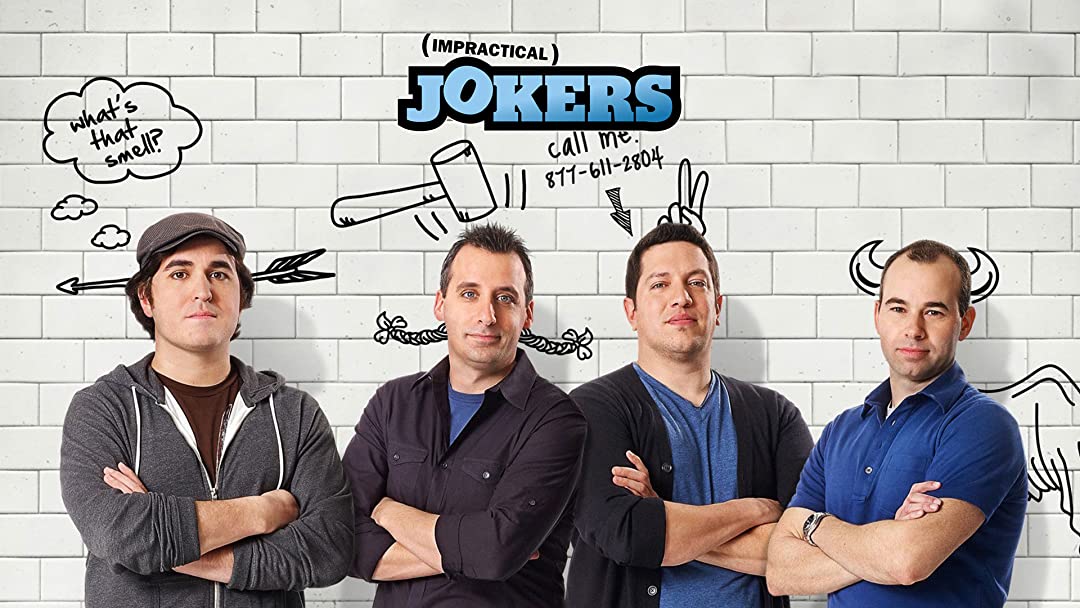
The Impractical Jokers — Joe Gatto, Sal Vulcano, Brian "Q" Quinn, and James "Murr" Murray — met as teenagers at a Catholic high school in Staten Island, New York. They formed a sketch comedy troupe called The Tenderloins and spent years grinding through live performances and early internet video before landing their signature hidden-camera show on truTV. What started as a passion project between four best friends became a decade-plus media franchise with real financial weight behind it.
What makes their trajectory genuinely interesting — and relevant beyond celebrity gossip — is how each member built wealth from multiple directions simultaneously. Television was the launchpad, but live tours, podcasts, merchandise, and publishing deals turned initial exposure into sustained income. This post breaks down their careers, the numbers, the most memorable quotes, and the business logic that made it all add up.
Contents
The Tenderloins spent years developing their comedy without any network support. That grind is an important part of the impractical jokers net worth story — because it explains why they were ready when the opportunity finally arrived. Their early steps looked like this:
What separates the Jokers from many one-hit entertainment stories is that their success was not accidental. They had already logged thousands of hours of live comedic performance by the time truTV came calling. That foundation of real-world experience made them naturals on camera — and it showed in how quickly the show found its audience.
Most aspiring entertainers today follow a similar path: build an audience online, prove the concept works, then approach traditional media with leverage. The Jokers were early practitioners of that model, even if the platforms they used looked different from what exists today.
Landing the truTV deal was the real inflection point. Once the show launched, everything accelerated quickly:
Within a few seasons, the show became truTV's flagship program. That status came with tangible financial benefits: higher per-episode fees, stronger syndication deals, and the brand recognition that attracts outside sponsorships and partnership opportunities. For anyone tracking how entertainers build wealth — similar to the paths covered in profiles of the richest actors in the world — the Jokers demonstrate that longevity matters as much as peak popularity.
The show ran for well over a decade, an extraordinary lifespan for any unscripted format. That duration is what transformed respectable television earnings into genuinely significant net worth figures for all four members.
Pinpointing exact celebrity net worth figures is never a precise science. Estimates pull from reported salaries, public business records, industry benchmarks, and entertainment media coverage. With that caveat clearly stated, here is what available sources suggest about each member's financial standing.
| Member | Estimated Net Worth | Notable Individual Projects |
|---|---|---|
| Joe Gatto | ~$7 million | Solo live comedy, merchandise, brand partnerships |
| Sal Vulcano | ~$7 million | What Say You? podcast, live touring, endorsements |
| Brian "Q" Quinn | ~$5 million | Tell 'Em Steve-Dave! podcast, merchandise, touring |
| James "Murr" Murray | ~$7 million | Fiction novels, live touring, film appearances |
These figures are estimates based on publicly available information. No member has disclosed personal financial statements, so all numbers should be treated as informed approximations rather than verified facts. The combined total across all four members is estimated at roughly $26 million.
Breaking down the revenue picture makes the numbers easier to understand. The group earns from several distinct categories simultaneously:
The pattern mirrors what financial content about money-making apps and side income strategies consistently emphasizes: multiple income streams provide genuine resilience. If any one source drops off, the others continue carrying the load. The Jokers arrived at this structure through organic growth and opportunity — but the financial result is the same as deliberate planning would have produced.
Impractical Jokers is built on a deceptively simple premise. Four friends dare each other to do awkward things in public. Real bystanders react without knowing they are being filmed. The joker who refuses or fails the most challenges receives that episode's punishment. Simple as that — and yet the format sustained well over 200 episodes without losing its essential appeal.
From a structural standpoint, each episode follows a clear and consistent pattern:
The format's strength lies in its flexibility. Any location works. Any scenario works. The challenges can be mild or extreme. The real engine of the show is the chemistry between the four members — and that chemistry cannot be manufactured by a writers' room. It either exists or it does not, and in this case, decades of genuine friendship made it unmistakable on screen.
Low production overhead also helped. Compared to scripted television, hidden-camera formats require minimal sets, no actors to hire beyond the hosts, and relatively streamlined post-production. That cost efficiency made the show profitable at lower ratings thresholds — giving it the breathing room to build an audience organically rather than needing immediate blockbuster numbers.
Several factors explain why the show maintained strong viewership across its entire run:
Pro insight: Content built around real relationships tends to outlast content built around manufactured drama — authenticity is difficult to replicate at scale, and experienced audiences can sense the difference immediately.

The social media dimension deserves special emphasis. Unlike older television formats that relied entirely on scheduled broadcast, Impractical Jokers generated a high volume of short, self-contained clips that spread organically across platforms. Each clip functioned as free advertising for the full show. This distribution model meant the program's real reach extended well beyond its official viewership numbers — and kept the brand alive during off-seasons with no new episodes.
Beyond the pranks, the show generated a rich catalogue of memorable lines. Some work as pure absurdist comedy. Others land because they sound exactly like something a real person would say after completely abandoning their dignity for the sake of a dare. Revisiting these quotes is a significant part of what keeps the fanbase engaged between new seasons.
Joe Gatto built a reputation as the most naturally uninhibited member of the group. His improvised lines often worked because they sounded completely sincere — even when the situation was entirely ridiculous:
Joe's quotes land because his delivery never breaks, even when the scenario spirals completely out of control. That total commitment to the bit — regardless of how far it goes — is what made him a fan favorite across the show's long run. Fans of celebrity career stories may also enjoy browsing profiles like the richest DJs and their paths to wealth, another group who turned passion into a surprisingly durable business.
Each remaining member brought a distinct comedic personality that shaped the moments they became most associated with:
The contrast between their personalities — Sal's reluctance, Q's stoicism, Murr's resigned acceptance — created a natural comedic balance that kept the format feeling fresh through hundreds of episodes. Those drawn to stories of public personalities building influence through consistency might also find value in exploring profiles of the richest activists, who demonstrate that audience loyalty built on authenticity translates across very different fields.
Most people watch Impractical Jokers for the entertainment value alone. But the impractical jokers net worth trajectory carries real lessons about building a sustainable career in any creative field — lessons that hold up well beyond the world of television comedy.
The group's financial profile is a useful model for how creative professionals can structure their income to avoid over-reliance on a single source:
Murr's fiction writing is the most instructive example here. Publishing novels is entirely unrelated to hidden-camera comedy, yet his existing fanbase gave him a built-in readership from day one. That kind of cross-platform audience loyalty is the ultimate goal of any creator-driven business, and it takes years of consistent, authentic output to build. It cannot be shortcut or manufactured.
The core principle is one that applies broadly: no single deal, platform, or employer should control the majority of any working person's income. The Jokers arrived at this structure through organic growth, but the financial logic is identical to what any sound financial advisor would recommend.
The show was never just entertainment — it was also a brand-building exercise, even if that framing came in retrospect rather than by design. The evidence is clear in hindsight:
That last point deserves emphasis. A brand built entirely around one personality is inherently fragile. A brand built around a format, a dynamic, and a community of loyal fans is far more durable. The Jokers built the latter, even if they did not plan it that way from the beginning.
Readers curious about how other individuals have built substantial wealth through diversification and platform-building may find it useful to explore profiles of the richest real estate investors, who applied similar principles of consistent brand-building and income diversification to a completely different industry with strikingly similar results.
Based on available estimates, the combined impractical jokers net worth across all four members is approximately $26 million. Individual figures range from around $5 million for Q to approximately $7 million each for Joe, Sal, and Murr. These are estimates drawn from entertainment industry sources — not verified financial disclosures — so they should be treated as informed approximations.
The largest share of their earnings comes from television licensing fees, live comedy tours, and syndication rights. Individual members supplement that base with podcasts, book publishing deals, merchandise sales, and brand partnerships. No single revenue stream accounts for the majority of any one person's income, which gives each member genuine financial stability that extends well beyond the show itself.
Joe Gatto announced his departure from the group for personal reasons after the show had already run for many seasons. truTV continued producing new episodes with the three remaining members — Sal, Q, and Murr. The show's challenge-based format, which naturally rotates focus between members, made it adaptable enough to continue without losing its core identity or dedicated audience.
The impractical jokers net worth story is ultimately about what happens when genuine talent meets relentless consistency — and smart, gradual diversification of income. The numbers are impressive, but the real takeaway is the model: build a loyal audience around something authentic, multiply revenue streams deliberately over time, and never let a single platform hold all the cards. Readers who want to keep exploring how different personalities across different fields have built lasting financial success are encouraged to browse the full net worth category for profiles that reveal the same core principles at work in very different contexts.


About Sunny Nguyen
Sunny Nguyen founded and runs DomainPromo, writing about domain investing, namespace trends, aftermarket resale channels, and the mechanics of pricing, parking, and flipping domains. His coverage draws on a decade of hands-on acquisition work, auction bidding at NameJet and GoDaddy Auctions, and tracking the ngTLD expansion since its early rollout. Sunny writes for small-time domainers and portfolio investors alike, focusing on defensible liquidation strategies, brandability signals, and the long tail of non-dot-com namespaces. He also covers registrar platform mechanics, DNS configuration, escrow services, and the technical plumbing beneath domain flipping — the practical knowledge buyers and sellers need but rarely find in one place.
Get FREE Gifts by that link. Or receive Freebies now. you can whitelist the Ad Block to see it all.
Once done, hit any button below
 omain