Pop Smoke rapper net worth was estimated at approximately $2 million at the time of his death in February 2020 — a remarkable sum for an artist who had been releasing music professionally for fewer than two years. His estate has continued to generate income through streaming royalties, posthumous album sales, and merchandise, meaning the total financial legacy sits considerably higher than that initial figure. Readers curious about how musicians and celebrities accumulate wealth will find additional profiles across the net worth category.
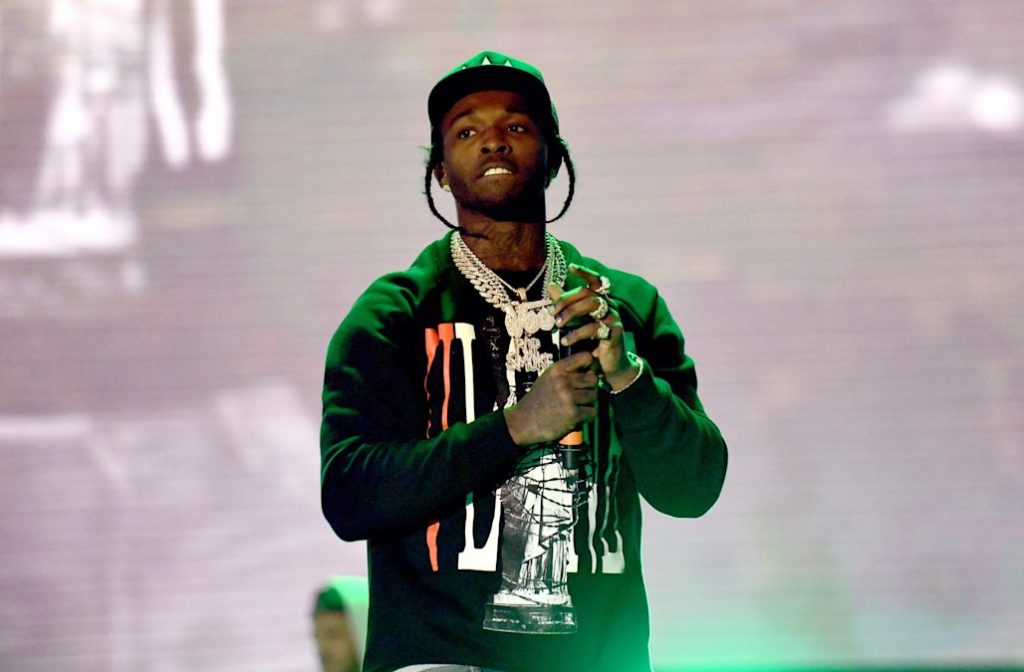
Born Bashar Barakah Jackson on July 20, 1999, in Canarsie, Brooklyn, Pop Smoke entered the music world in 2018 with a voice and delivery that felt unlike anything circulating in mainstream rap at the time. His 2019 single "Welcome to the Party" fused New York aggression with UK drill production, earned remix features from Nicki Minaj and Skepta, and established Brooklyn drill as a globally recognized subgenre almost overnight. He released two mixtapes — Meet the Woo and Meet the Woo 2 — before his death, both of which accumulated tens of millions of streams and demonstrated a commercial appetite that was only beginning to translate into substantial revenue.
His trajectory shares certain qualities with other artists who built enduring financial legacies despite careers cut tragically short, including Young Dolph, whose estate continued generating income and cultural relevance well after his 2021 passing. Understanding Pop Smoke's financial picture means tracing both the active earning window and the posthumous income streams that have kept his catalog commercially vital.
Contents
Pop Smoke's introduction to the music industry was largely self-directed, built on informal recordings, local relationships, and the kind of persistent output that the streaming era rewards with algorithmic discovery when the timing aligns. He signed with Victor Victor Worldwide, a Republic Records subsidiary, after his music began gaining meaningful traction online — a deal that provided distribution infrastructure while leaving considerable creative latitude intact. At that early stage, his earnings were modest: income derived primarily from SoundCloud streams, YouTube views, and local performance appearances, none of which individually amount to significant revenue for a first-year artist.
What made the early period consequential was less about money and more about catalog accumulation. Every track released in those first months was laying groundwork for the royalty streams that would follow once audience size crossed the threshold where streaming payouts become material. Most emerging artists spend three to five years building that foundation; Pop Smoke compressed the timeline into roughly eighteen months, accelerating from obscurity to international recognition at a pace that surprised even industry insiders who had been watching his development.
"Welcome to the Party," released in April 2019, was the inflection point that separated Pop Smoke's early grind from his commercial phase. The track's distinctive production — courtesy of 808Melo — landed differently than anything else in the New York rap ecosystem at the time, and its international crossover sparked remix interest that brought him into contact with established artists whose fanbases dwarfed his own. The Nicki Minaj remix, released in May 2019, functioned as an audience transfer on a significant scale, introducing Pop Smoke to listeners who had no prior awareness of Brooklyn drill.
His second mixtape, Meet the Woo 2, released in February 2020, debuted at number seven on the Billboard 200 — a chart position that few artists with primarily free-tier projects reach, and one that confirmed a paying audience was forming around his work. That commercial signal arrived just days before his death, meaning the full financial upside of that momentum was never realized during his lifetime, though the posthumous period would capture much of it.
Estimates of Pop Smoke rapper net worth at the time of his death converge around the $2 million range, though that figure carries meaningful uncertainty because historical earnings data for independent-adjacent artists is rarely disclosed publicly. The estate's total value — factoring in catalog rights, future royalty flows, and brand equity — is widely believed to be several times higher when measured over a longer horizon. The numbers below represent best estimates derived from reported stream counts, industry royalty norms, and publicly available deal context.
| Income Source | Estimated Contribution | Notes |
|---|---|---|
| Streaming royalties (Spotify, Apple Music, YouTube) | $500K – $900K | Based on reported stream counts prior to death; ongoing posthumously |
| Record deal advances (Victor Victor / Republic) | $300K – $700K | Specific deal terms not publicly confirmed; standard range for his profile |
| Merchandise sales | $100K – $300K | Grew substantially after posthumous releases lifted brand recognition |
| Concert and appearance fees | $50K – $150K | Limited touring window; full touring potential was never realized |
| Posthumous album revenue (2020 – present) | Ongoing / Significant | Shoot for the Stars debuted at No. 1; certified 4× Platinum in the US |
"Shoot for the Stars, Aim for the Moon," released posthumously in July 2020 and curated by 50 Cent alongside producer Rico Beats, debuted at number one on the Billboard 200 and became one of the best-selling rap albums of that calendar year. A second posthumous project, "Faith," followed in 2021, extending the catalog and introducing additional royalty streams. Combined, the two albums generated streaming figures in the billions, which at industry standard royalty rates produces substantial ongoing income for the estate.
According to Pop Smoke's Wikipedia entry, "Shoot for the Stars, Aim for the Moon" achieved quadruple platinum certification in the United States, a commercial milestone that underscores how far his audience extended beyond the Brooklyn drill niche where he began. That certification represents a minimum of four million album-equivalent units, translating into royalty income that far exceeded anything he collected during his active career.
What made Pop Smoke's commercial ascent noteworthy was not only the music itself but the deliberate — and often instinctive — moves that amplified his reach beyond what streaming numbers alone could generate. His approach to brand-building, whether conscious strategy or natural extension of who he was, offers a useful framework for understanding how artists in the digital era convert cultural heat into durable income streams.
Pop Smoke maintained a consistent visual identity throughout his short career: the heavy winter coat, the stoic expression, the unmistakably deep Brooklyn accent that marked every interview clip and social media appearance. Authenticity, in his case, was not a marketing strategy so much as a natural byproduct of staying genuinely connected to his environment and community. That consistency made him immediately recognizable across platforms and helped merchandise resonate with fans in a way that generic artist branding rarely achieves — buyers were not purchasing a logo; they were purchasing an identity that felt real to them.
Artists who maintain a consistent visual and sonic identity tend to convert casual listeners into paying fans at meaningfully higher rates — authenticity remains one of the most underrated revenue drivers in music, regardless of genre or era.
The Nicki Minaj remix of "Welcome to the Party" was a pivotal commercial positioning move, exposing Pop Smoke to an audience that would not have discovered Brooklyn drill independently. Collaborations at that level function as audience exchanges — each artist brings their established fanbase into contact with the other's catalog, compounding reach without requiring additional marketing spend from either party. For an emerging artist, access to that kind of exposure is often worth more than an advance payment in terms of long-term career value.
His willingness to work across subgenre boundaries — from UK drill features to more accessible mainstream collaborations — also expanded his commercial ceiling in ways that a more rigid artistic identity might not have permitted. Similar cross-genre flexibility has driven the financial success of artists like Bad Bunny, whose net worth reflects the compounding effect of bridging Latin trap with mainstream pop without sacrificing the core audience loyalty that made him valuable in the first place.
Placing Pop Smoke rapper net worth in proper context requires looking at comparable artists — those who emerged within similar timeframes, with similar distribution models, and who built comparable audience sizes before their careers reached their natural ceiling, whether through choice, circumstance, or tragedy.
An estimated $2 million net worth within eighteen months of professional release activity is genuinely unusual, even in a streaming economy where audience accumulation can happen faster than at any prior point in music history. Most artists with comparable career length would sit well below seven figures, making Pop Smoke's financial position at death a reflection of both the speed of his viral rise and the efficiency with which his team converted attention into income. The deal structure with Victor Victor and Republic was a meaningful accelerant — major-label distribution reach combined with the credibility of an independent-adjacent imprint served his catalog well across multiple markets simultaneously.

The posthumous valuation of his estate is likely several times higher than his net worth at the time of death, given the scale of album sales, streaming growth, and sustained merchandise activity. This places his situation in an unusual category: an artist whose financial peak arrived after his career ended, rather than during it.
There is a meaningful and often overlooked distinction between an artist's cultural footprint and their measurable net worth, and Pop Smoke illustrates that gap with particular clarity. His influence on Brooklyn drill, on the UK-New York creative exchange, and on a generation of younger artists who absorbed his cadence, delivery, and production sensibility is arguably worth more in terms of long-term cultural capital than any dollar figure attached to his estate. Financial rankings capture a snapshot in time; they do not capture the degree to which an artist reshapes a genre's sonic vocabulary. The same observation applies to the music industry broadly — financial roundups like the top richest DJs list illustrate how wealth rankings often reflect business acumen and longevity as much as pure artistic influence.
Several recurring errors appear consistently whenever Pop Smoke rapper net worth is discussed in online forums, comment sections, and entertainment media, and addressing them directly produces a more accurate picture of what his financial legacy actually represents and how it was built.
"Welcome to the Party" received hundreds of millions of streams before the algorithms, licensing agreements, and distribution mechanisms had fully converted that attention into money for Pop Smoke specifically. Streaming royalties for independent and semi-independent artists are distributed on quarterly cycles, and label advances — while providing upfront capital — are typically recouped against future earnings before the artist sees additional cash flow. Management fees, legal costs, promotional expenses, and studio time all represent subtractions from gross income that are invisible to outside observers looking at stream counts or chart positions.
Viral fame and liquid wealth are not the same thing, particularly in the first eighteen months of a career, when the infrastructure needed to convert attention into revenue is still being assembled and when existing agreements are still being negotiated toward more favorable terms. Many observers assign net worth figures to emerging artists that reflect the value of their cultural moment rather than their actual bank balance.
The inverse error is equally common: assuming that blockbuster posthumous commercial success translates into straightforward, large-scale income for an artist's family or estate. Estate management, existing label contracts, advance recoupment agreements, and production cost obligations all influence how posthumous revenue is ultimately distributed among the various parties with a contractual claim on it. The gross earnings from "Shoot for the Stars, Aim for the Moon" were substantial by any measure; the net amount flowing to family members depends on contractual variables that are not disclosed publicly and may differ significantly from what raw sales figures suggest.
A useful corrective when evaluating any celebrity net worth figure — musician or otherwise — is to treat published estimates as approximations derived from public data, not audited financial statements reflecting verified assets minus verified liabilities. Most figures circulating online are reconstructed from reported deal sizes, chart performance metrics, and industry compensation norms.
Pop Smoke's professional career unfolded in a concentrated burst between late 2018 and early 2020, with a handful of specific inflection points that determined both his artistic direction and his financial trajectory during that window and beyond.
The period from mid-2019 through February 2020 represents the window when Pop Smoke's career was operating at full acceleration, with each release building measurably on the one before it. "Welcome to the Party" dropped in April 2019; the Nicki Minaj remix followed in August. Meet the Woo arrived in July 2019, and Meet the Woo 2 in February 2020, each generating press coverage, streaming growth, and the industry attention that typically leads to better deal terms, stronger feature opportunities, and improved merchandise margins in subsequent negotiating cycles.
This period also represents the window when his live performance potential was most clearly defined. Concert revenue typically becomes the dominant income source for artists at Pop Smoke's level of recognition, often outpacing streaming royalties by a significant multiple once touring schedules are fully operational. His touring calendar was expanding when his life was cut short on February 19, 2020, during a home invasion in Los Angeles at age twenty, meaning the largest single income stream available to him at that stage never fully materialized.
Following his death, the commercial arc of his career shifted from active artist income to estate asset management — a fundamentally different economic model with different stakeholders, incentives, and timelines. The posthumous releases were simultaneously a tribute to his work and a commercial decision, with "Shoot for the Stars, Aim for the Moon" drawing from recorded sessions to assemble a full album that his team believed reflected his intended artistic direction. The album's chart success confirmed that the demand for his voice and sound extended well beyond his existing fanbase.
What the posthumous period also accomplished was a crystallization of Pop Smoke's image in ways that living artists rarely experience: his catalog stopped growing, meaning each existing track now carries the full weight of fan attachment without dilution from new material that might shift perceptions. That scarcity dynamic tends to sustain catalog value over longer periods, a pattern observable across the estates of other artists who left incomplete catalogs — the finite supply against sustained or growing demand produces a different financial profile than an active artist adding new work continuously.
Pop Smoke's net worth was estimated at approximately $2 million when he died in February 2020. The figure reflects his active earnings from streaming, his record deal advance, and merchandise revenue accumulated during roughly eighteen months of professional music activity, and does not include the substantial posthumous income generated through his estate.
Pop Smoke was twenty years old at the time of his death on February 19, 2020. Born Bashar Barakah Jackson on July 20, 1999, in Canarsie, Brooklyn, he had not yet reached his twenty-first birthday when he was killed during a home invasion in Hollywood Hills, Los Angeles.
His biggest commercial achievement was the posthumous album "Shoot for the Stars, Aim for the Moon," released in July 2020. It debuted at number one on the Billboard 200, was certified quadruple platinum in the United States, and became one of the highest-selling rap albums of that year, featuring collaborations with Quavo, DaBaby, Roddy Ricch, and others.
Pop Smoke's estate has been managed by his family in coordination with his label, Victor Victor Worldwide and Republic Records. The posthumous album projects were curated with involvement from 50 Cent and producer Rico Beats, who worked with existing recorded material from Pop Smoke's sessions. Specific estate management terms have not been publicly disclosed in full detail.
During his active career, Pop Smoke earned income through streaming royalties from platforms including Spotify, Apple Music, and YouTube, a record deal advance from his label, merchandise sales, and concert and appearance fees. Streaming royalties and the label advance represented his two largest individual income sources, while live performance income was beginning to scale up at the time of his death.
Yes, the value of Pop Smoke's estate has grown substantially since his death, driven primarily by the commercial performance of his two posthumous albums and the ongoing streaming activity across his full catalog. While exact figures are not publicly disclosed, the chart success and platinum certifications of "Shoot for the Stars, Aim for the Moon" alone represent earnings that far exceeded his estimated $2 million net worth at the time of his passing.


About Sunny Nguyen
Sunny Nguyen founded and runs DomainPromo, writing about domain investing, namespace trends, aftermarket resale channels, and the mechanics of pricing, parking, and flipping domains. His coverage draws on a decade of hands-on acquisition work, auction bidding at NameJet and GoDaddy Auctions, and tracking the ngTLD expansion since its early rollout. Sunny writes for small-time domainers and portfolio investors alike, focusing on defensible liquidation strategies, brandability signals, and the long tail of non-dot-com namespaces. He also covers registrar platform mechanics, DNS configuration, escrow services, and the technical plumbing beneath domain flipping — the practical knowledge buyers and sellers need but rarely find in one place.
Get FREE Gifts by that link. Or receive Freebies now. you can whitelist the Ad Block to see it all.
Once done, hit any button below
 omain
omain