A finance professor once assigned students to calculate how long it would take a Goldman Sachs analyst — starting at $150,000 a year — to match the net worth of the firm's most legendary alumni. The math never worked out in the analyst's favor. The richest investment bankers in the world didn't accumulate their fortunes through salaries alone; they leveraged equity stakes, carried interest, and proprietary trading strategies to build generational wealth. For anyone tracking elite financial figures through the net worth category, investment banking dynasties offer some of the most instructive case studies available.

These eight names span hedge funds, private equity, sovereign wealth management, and multinational banking conglomerates. Each built their fortune through a distinct combination of timing, institutional access, and relentless capital discipline. Understanding what separates them from the merely wealthy reveals a pattern that extends far beyond picking the right stocks or landing a prestigious internship at a bulge-bracket firm.
The wealth-building pathways of these financiers differ fundamentally from those of the richest stock investors in the world, who typically built wealth through equity accumulation rather than deal-making and fee structures. Investment banking wealth runs on different fuel — carried interest, management fees, and control of institutional capital at scale. The structural difference matters more than any individual trade.
Contents
The public image of investment banking — analysts grinding through pitch decks at 2 a.m. — captures only the entry-level reality. At the highest levels, investment bankers function more like capital architects: they structure deals, allocate assets across multiple classes, and position institutions to capture value before markets price it in. Every individual profiled here made a critical transition from transactional banking into ownership, equity participation, and fund management. That shift is where real wealth creation begins.
Advisory fees generate income. Carried interest and equity ownership generate dynasties. The distinction is absolute, and every billionaire on this list understood it early enough to act on it.
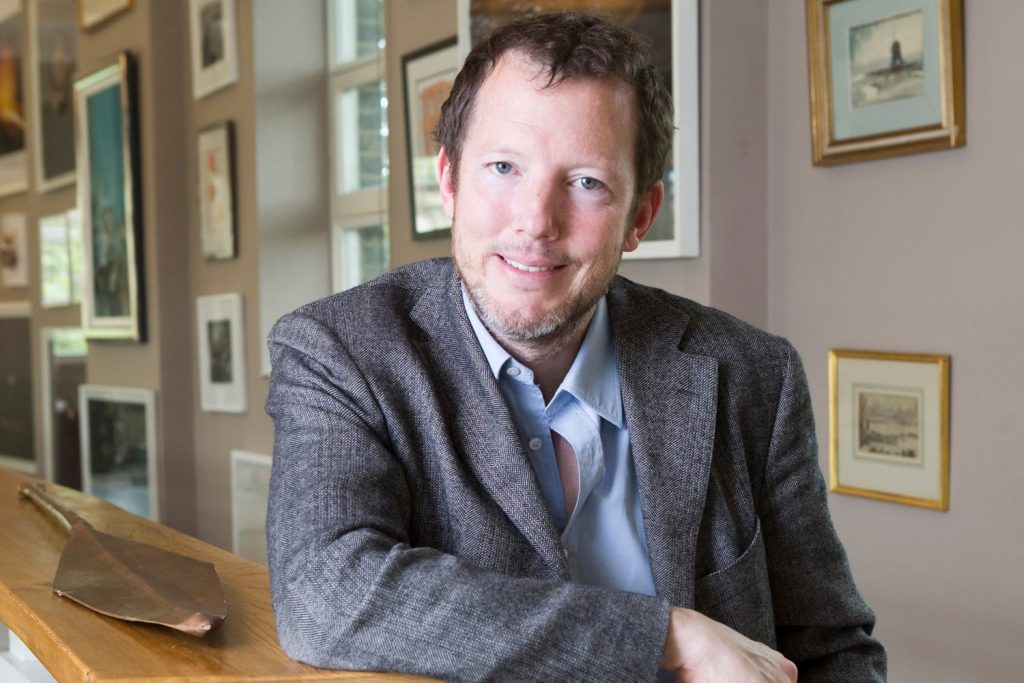
Nathaniel Rothschild carries one of the most recognized names in global finance. As heir to the Rothschild banking dynasty — one of the wealthiest and most enduring financial families in recorded history — he chairs NR Investments and has executed significant private equity deals across Eastern Europe, Asia, and natural resources. His net worth stands at approximately $5 billion, built on a foundation of dynastic capital combined with modern deal-making acumen and deep cross-border relationships.
Rothschild's approach combines legacy relationships with opportunistic private equity plays in markets most institutional investors avoid. His involvement in the Bumi Resources deal — a high-profile Indonesian coal investment — illustrated both his willingness to take emerging market risk and the execution costs when complex cross-border transactions go sideways. The lesson embedded in that episode: even dynastic capital with centuries of institutional credibility behind it isn't immune to poor deal structure and governance failures.

Leon Black co-founded Apollo Global Management in 1990 after leaving Drexel Burnham Lambert following the firm's collapse. Apollo grew into one of the world's most powerful alternative asset managers, overseeing hundreds of billions in assets across credit, private equity, and real assets. Black's net worth reached approximately $7.5 billion at its peak, representing decades of carried interest and co-investment returns accumulated through some of the most complex distressed debt transactions in private equity history.
Every career path carries a distinct risk-reward profile, and investment banking at the elite level is no exception. The structural advantages are extraordinary — but so are the vulnerabilities, which often remain invisible until a crisis or compliance failure forces them into public view. Understanding both sides with clear eyes is the prerequisite for building lasting wealth in this industry.
The same leverage that amplifies gains on the way up accelerates losses on the way down. Several bankers profiled here experienced dramatic reversals — not because their fundamental skills failed, but because external conditions overwhelmed even sophisticated risk management frameworks built over decades.
Market crises are the ultimate stress test. Strategies that look brilliant during a bull cycle reveal structural weaknesses the moment liquidity dries up, correlations spike toward 1.0, and counterparties start defaulting. The bankers who survive — and occasionally thrive — during these conditions share specific behavioral and structural traits that distinguish them from those who don't make it through intact.

Ken Griffin founded Citadel in 1990 while still at Harvard, trading convertible bonds from his dormitory. Citadel became one of the most dominant hedge fund and market-making operations globally. Griffin's net worth is estimated at $8.6 billion. During the 2008 financial crisis, Citadel's flagship fund lost approximately 55% — one of the sharpest drawdowns of any major hedge fund. Rather than liquidating, Griffin maintained investor relationships, restructured risk exposures, and rebuilt systematically over the following two years.
The 2008 experience proved transformative rather than terminal. Citadel Securities — the market-making arm — expanded aggressively in the aftermath, capturing market share from banks retreating under post-crisis regulatory pressure. Crisis became a structural opportunity for capital deployment at a scale that only firms with surviving balance sheets could access. Operational survival during a crisis is itself a competitive advantage when all the distressed assets need buyers.

Jim Simons, founder of Renaissance Technologies, represents the apex of quantitative finance. A former mathematics professor and Cold War code-breaker, Simons built the Medallion Fund into the most successful investment vehicle in recorded history by annualized return — reportedly generating returns above 60% per year before fees for multiple decades. His net worth stands at approximately $23.5 billion, making him the wealthiest figure on this list by a significant margin.
Renaissance's edge comes from proprietary statistical models that identify market inefficiencies invisible to human traders operating on conventional analytical frameworks. During the 2008 global financial crisis, Medallion returned roughly 80% — one of the few funds to profit dramatically while the broader financial system collapsed. According to Renaissance Technologies' documented history, the firm's methodology is rooted in signal detection across enormous datasets, a process maintained under near-impenetrable secrecy agreements that have held for decades.
Short-term trades generate income. Long-term frameworks generate dynasties. Every banker on this list built sustained wealth through systems and institutional structures that continued generating returns independent of any single market cycle or macroeconomic regime. The frameworks differ, but the commitment to systematic long-term thinking is universal.

Ray Dalio founded Bridgewater Associates in 1975 from a two-bedroom apartment in New York City. It grew into the world's largest hedge fund by assets under management. Dalio's net worth reached approximately $16.9 billion. His "All Weather" portfolio concept — designed to perform across all economic environments regardless of growth or inflation conditions — became one of the most replicated frameworks in institutional investing history.
Dalio's long-term approach rests on a few core principles: radical transparency in decision-making, systematic documentation of investment logic, and portfolio construction that prioritizes risk parity over raw return maximization. These aren't abstract ideals. They are codified operating procedures that Bridgewater follows at every organizational level, creating institutional consistency that survives individual personnel changes. The framework outlasts any single market call or personnel decision.
| Name | Net Worth | Primary Firm | Core Specialty | Key Wealth Driver |
|---|---|---|---|---|
| Jim Simons | $23.5 billion | Renaissance Technologies | Quantitative Finance | Statistical arbitrage / systematic trading |
| Ray Dalio | $16.9 billion | Bridgewater Associates | Global Macro | Risk parity / All Weather portfolio model |
| Ken Griffin | $8.6 billion | Citadel | Multi-strategy / Market Making | Volatility capture / post-crisis deployment |
| Leon Black | $7.5 billion | Apollo Global Management | Alternative Assets / Private Equity | Distressed debt / carried interest at scale |
| Nathaniel Rothschild | $5 billion | NR Investments | Private Equity / Legacy Capital | Dynastic capital deployment + deal access |
| Andre Esteves | $2.5 billion | BTG Pactual | Emerging Markets Investment Banking | Latin American capital markets leadership |
| Ihor Kolomoyskyi | $1.47 billion | PrivatBank | Commercial / Investment Banking | Banking infrastructure as industrial platform |
| Timothy J. Sloan | $700 million | Wells Fargo | Commercial Banking | Institutional compensation over decades |
Knowing which financial instruments created these fortunes matters more than memorizing the net worth figures themselves. The vehicles are replicable in principle — even if the scale isn't — and they reveal the structural advantages that elite bankers exploit with systematic consistency. Private equity carry, quantitative models, and emerging market deal flow each represent distinct access points to institutional wealth creation.
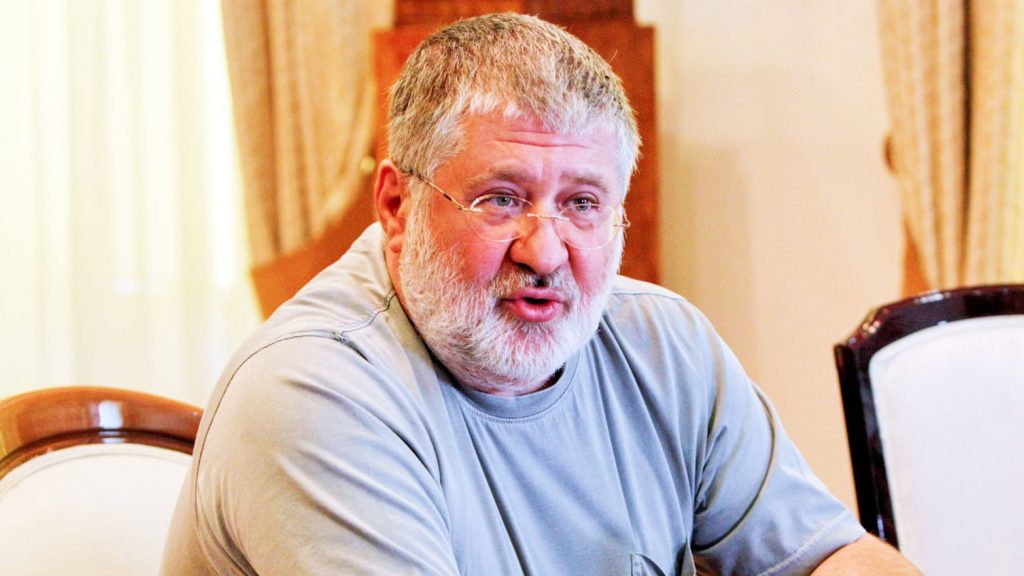
Ihor Kolomoyskyi built his fortune through PrivatBank, Ukraine's largest commercial bank, alongside substantial holdings in media, energy, and aviation. His net worth stands at approximately $1.47 billion. The PrivatBank case became internationally significant when the Ukrainian government nationalized the institution in 2016 following allegations of large-scale capital misappropriation — a development that illustrates in stark terms the political risk inherent in controlling financial institutions within transitional economies.
Kolomoyskyi's wealth model relied on banking infrastructure as an aggregation platform — using deposit networks to fund diversified industrial and media investments across Ukraine and beyond. Control of a major commercial bank provides access to capital that pure investment banks operating on fee income cannot replicate. The tradeoff is regulatory and political exposure that grows proportionally with institutional size and political influence.

Andre Esteves rebuilt BTG Pactual into Latin America's most prominent investment bank after buying it back from UBS following the financial crisis. His net worth is estimated at $2.5 billion. BTG's strength lies in emerging market deal flow — a niche where relationship capital and localized market knowledge create competitive moats that global banks headquartered in London or New York consistently struggle to replicate.
The careers of the richest investment bankers in the world aren't unblemished records of optimal decisions. Each profile includes serious setbacks — some self-inflicted, some systemic. Studying these failures is at least as instructive as studying the wins, because the failure modes in elite banking cluster around predictable and avoidable blind spots. Recognizing them early is the difference between a temporary setback and a career-defining catastrophe.

Timothy Sloan served as CEO of Wells Fargo during one of the most damaging corporate scandals in U.S. banking history. The unauthorized account scandal — in which bank employees opened millions of fraudulent accounts under customer names to meet aggressive internal sales quotas — cost the institution billions in regulatory fines and reputational damage. It cost Sloan his position. His net worth is estimated at $700 million, accumulated through decades of institutional compensation at one of America's largest banks before the crisis arrived.
Sloan's situation exemplifies incentive misalignment at institutional scale. When performance metrics reward volume above ethical conduct, and when executive oversight fails to detect systemic misconduct across hundreds of thousands of employees, the institution absorbs the regulatory and financial cost — and the executive's reputation absorbs the rest, regardless of direct personal culpability in specific fraudulent acts.
Across the eight profiles here, recurring failure patterns emerge with enough consistency to constitute a framework for avoidance:
The wealth-building risks in banking differ markedly from other high-earning professions. Readers interested in how the richest actors in the world navigated entirely different brand and career risks will find that the failure modes — overextension, reputational collapse, poor financial management — rhyme even when the industries don't.
The question of timing in investment banking careers is more nuanced than most career guidance acknowledges. Market cycles, regulatory environments, and structural industry shifts all determine whether a given decade is fertile ground for building a banking fortune or a graveyard for ambitious careers that launched at the wrong moment. Recognizing the difference between a structurally favorable environment and a dangerous one is a core competency of every billionaire on this list.
Not every market environment or institutional moment is suitable for aggressive wealth-building through banking structures. Recognizing adverse conditions before committing capital or career trajectory matters enormously at senior levels:
The cumulative record of these eight careers offers a distilled set of observations applicable far beyond investment banking. These patterns apply to anyone building serious wealth through financial services, business ownership, or institutional capital management at any meaningful scale.
Jim Simons of Renaissance Technologies holds the top position among the richest investment bankers in the world, with a net worth of approximately $23.5 billion. His Medallion Fund is widely regarded as the most successful investment vehicle in recorded financial history by annualized return, driven by proprietary quantitative models developed and refined over more than three decades.
The transition from high-earning banker to billionaire almost always involves a structural shift to ownership — specifically carried interest in private equity or hedge fund vehicles, equity stakes in financial firms, and co-investment returns that compound across market cycles. Salary alone, even at the most prestigious bulge-bracket firms, does not generate billion-dollar wealth. The critical inflection is moving from fee-earner to capital owner.
Traditional investment banking generates income through advisory services — M&A mandates, capital markets issuance, and debt structuring. Hedge fund management involves directly investing capital and charging performance fees (typically 20% of profits) plus annual management fees on assets under management. The wealthiest figures on this list primarily built their fortunes through fund management and ownership stakes rather than advisory fee revenue.
Managing directors at bulge-bracket banks typically earn $1 million to $3 million annually in total compensation. Partners at major private equity firms and hedge funds can earn tens or hundreds of millions annually through carried interest in strong performance years. The range is enormous, and the highest earners are almost universally fund principals with ownership stakes rather than salaried employees at any level.
Carried interest is the share of investment profits — typically 20% — that fund managers receive above and beyond their management fees. On a $10 billion fund returning 20% annually, carried interest alone generates $400 million per year for the general partners. This compounding mechanism, sustained over decades across multiple fund vintages, is the primary structural engine behind the largest fortunes in private finance.
Several faced significant legal and regulatory challenges. Ihor Kolomoyskyi's PrivatBank was nationalized by the Ukrainian government amid allegations of large-scale fraud. Timothy Sloan's tenure at Wells Fargo ended amid one of the largest consumer banking scandals in U.S. history. Leon Black stepped down from Apollo following public scrutiny of his personal associations. Regulatory and reputational risk operate as constant, irreducible factors at this level of financial power.
The group spans mathematics (Jim Simons holds a PhD from Berkeley), economics and business (Ray Dalio earned an MBA from Harvard), and law (Leon Black attended Harvard Law). Ken Griffin attended Harvard as an undergraduate. Academic prestige correlates strongly with early career access to top institutions, but each banker ultimately built their wealth through proprietary insight and disciplined institutional execution rather than credentials alone.
Timelines vary significantly. Jim Simons built his fortune over thirty-plus years of compounding returns. Ken Griffin launched Citadel at 22 and reached billionaire status within a decade of peak performance. Ray Dalio founded Bridgewater at 26 and built it into a multi-billion-dollar institution over four decades. The consistent pattern across all profiles is 15 to 30 years of sustained compounding, with billionaire thresholds typically crossed during or immediately after a major market cycle inflection.


About Sunny Nguyen
Sunny Nguyen founded and runs DomainPromo, writing about domain investing, namespace trends, aftermarket resale channels, and the mechanics of pricing, parking, and flipping domains. His coverage draws on a decade of hands-on acquisition work, auction bidding at NameJet and GoDaddy Auctions, and tracking the ngTLD expansion since its early rollout. Sunny writes for small-time domainers and portfolio investors alike, focusing on defensible liquidation strategies, brandability signals, and the long tail of non-dot-com namespaces. He also covers registrar platform mechanics, DNS configuration, escrow services, and the technical plumbing beneath domain flipping — the practical knowledge buyers and sellers need but rarely find in one place.
Get FREE Gifts by that link. Or receive Freebies now. you can whitelist the Ad Block to see it all.
Once done, hit any button below
 omain
omain